Movement Certificates: EUR.1 and EUR-MED for EU Exporters
Quick answer
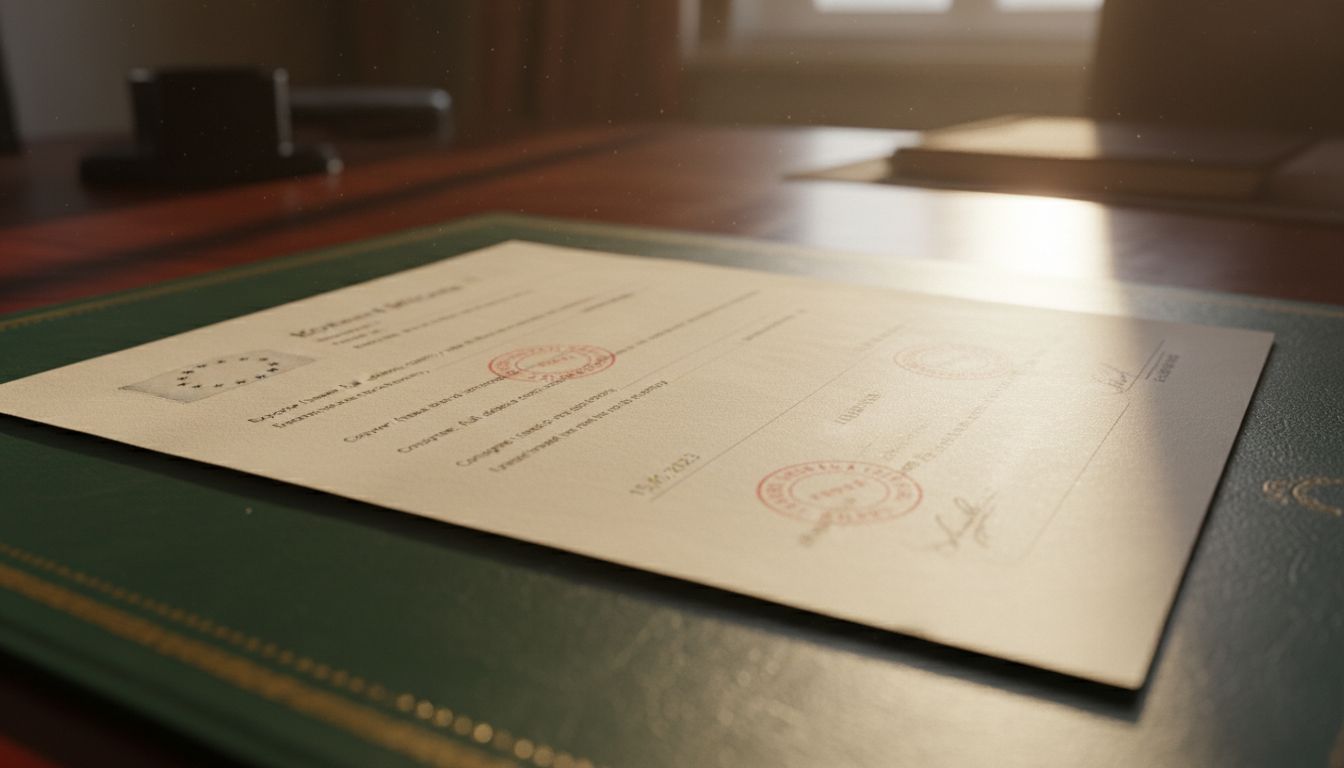
Movement certificates EUR.1 and EUR-MED are official documents issued by the customs authorities of the exporting EU Member State to certify the preferential origin of goods. They enable EU exporters to benefit from reduced or zero customs duties under preferential trade agreements. The choice between EUR.1 and EUR-MED depends on the applicable trade agreement and the origin rules governing the goods [1][2].
DAsk the AI Customs Broker — free, no sign-up to try.Key takeaways
- Movement certificates EUR.1 and EUR-MED certify preferential origin for goods exported from the EU under specific trade agreements.
- EUR.1 applies to preferential trade between the EU and certain countries, while EUR-MED is used under Pan-Euro-Mediterranean agreements with extended cumulation rules.
- Exporters must complete a declaration on the certificate form, supported by relevant documentation proving origin.
- Certificates must be printed on secure paper with specific dimensions and security features.
- Customs endorsement by the competent authority of the exporting Member State is mandatory before export.
- Accurate completion of key information on the certificate is essential to avoid delays or rejection at import.
- The relevant national customs authority issues the certificates upon verification of origin compliance.
What are EUR.1 and EUR-MED Movement Certificates?
Movement certificates EUR.1 and EUR-MED are official documents used by exporters in the EU to certify that goods qualify as originating under preferential trade agreements. These certificates enable the goods to benefit from preferential customs treatment, such as reduced or zero customs duties, when imported into partner countries.
The EUR.1 certificate is the traditional movement certificate used in preferential trade between the EU and countries with which it has bilateral or multilateral agreements. The EUR-MED certificate, by contrast, is used under the Pan-Euro-Mediterranean system, which covers a broader network of countries and allows for extended cumulation of origin. This means that materials or processing carried out in certain countries within the system can be considered as originating, facilitating trade and supply chain flexibility [1:1][2:1].
Both certificates serve the same fundamental purpose but apply to different preferential trade contexts and rules of origin regimes.
When to Use Which Certificate
EU exporters must determine which movement certificate to use based on the preferential trade agreement governing the export and the origin rules applicable to the goods.
-
EUR.1 Certificate: This is used for exports under preferential agreements where the rules of origin are based on bilateral or traditional arrangements. It certifies that the goods meet the origin criteria established by the agreement between the EU and the importing country or territory.
-
EUR-MED Certificate: This certificate applies under the Pan-Euro-Mediterranean Convention, which includes the EU and various Mediterranean and other partner countries. The EUR-MED allows for cumulation of origin, meaning materials from any contracting party can be considered as originating when incorporated into the product. This certificate is necessary where the preferential agreement explicitly requires it and where cumulation provisions apply.
Exporters must verify the applicable trade agreement and origin rules to select the correct movement certificate. Using the wrong certificate may lead to refusal of preferential treatment and customs delays [2:2][3].
Exporter’s Declaration: Your Core Responsibility
A critical element of the movement certificate is the exporter’s declaration. The exporter must personally declare that the goods described meet the conditions required for the issue of the certificate. This declaration is made on the certificate form itself and includes:
- Confirmation that the goods comply with the preferential origin criteria.
- Specification of the circumstances enabling the goods to meet these conditions.
- Submission of supporting documents such as import documents, previous movement certificates, invoices, or manufacturer’s declarations relating to the materials or manufacturing process.
- An undertaking to provide any additional evidence or allow inspections by the competent authorities if requested.
This declaration is legally binding and must be signed and dated by the exporter. It forms the basis for the customs authority to issue the certificate and for the importing country to grant preferential treatment [4][5][6][7].
Printing and Form Specifications
Movement certificates EUR.1 and EUR-MED must be printed on secure paper that meets strict specifications to prevent falsification. The key printing and form requirements are:
- Size: Each form measures 210 x 297 mm, with a tolerance of minus 5 mm or plus 8 mm in length.
- Paper: White, sized for writing, without mechanical pulp, weighing at least 25 g/m².
- Security: Printed with a green guilloche pattern background to make any mechanical or chemical falsification apparent.
- Printing: The competent authorities may print the forms themselves or use approved printers. Each form must include a reference to the approval, the printer’s name and address or identifying mark, and a serial number for traceability.
- Language: The certificate must be completed in one of the official languages of the EU, in ink and capital letters if handwritten.
These specifications ensure the authenticity and uniformity of the certificates across the EU and partner countries [4:1][5:1][1:2][2:3][3:1][6:1][7:1][8].
Supporting Documentation Requirements
To obtain a movement certificate, exporters must submit supporting documents that demonstrate the goods meet the preferential origin criteria. Such documents may include:
- Import documents for materials used in manufacture.
- Previous movement certificates if the goods are re-exported in the same state.
- Invoices detailing the goods and their origin.
- Manufacturer’s declarations confirming the origin of components.
- Any other documents required by the customs authorities to verify compliance.
The exporter must specify these supporting documents in the declaration section of the certificate form. Customs authorities may request to review these documents or conduct inspections to verify the origin claim before issuing the certificate. Maintaining accurate and complete documentation is therefore essential to ensure smooth customs clearance and preferential treatment [4:2][5:2][6:2][7:2].
Customs Endorsement and Verification
The movement certificate must be endorsed by the customs office of the exporting EU Member State before the goods leave the EU. This endorsement certifies that the customs authority has verified the origin declaration and supporting evidence and confirms the certificate’s authenticity.
The endorsement section of the certificate includes:
- The customs office name.
- The issuing country or territory.
- The date and place of issue.
- The signature and stamp of the customs officer.
In some cases, customs authorities may request verification from the importing country or other competent authorities to confirm the accuracy of the certificate. The certificate form includes provisions for requesting and recording such verification results.
Without customs endorsement, the certificate is invalid, and preferential treatment may be denied at import. Exporters should ensure the certificate is properly endorsed before shipment [1:3][2:4][3:2][7:3].
Key Information to Provide on the Certificate
Completing the movement certificate accurately is crucial. The key fields that exporters must provide include:
- Exporter Details: Full name, address, and country of the exporter.
- Certificate Number: Unique serial number assigned to the certificate.
- Trade Agreement: The countries or groups of countries between which the certificate is used.
- Consignee Details: Name, address, and country of the recipient (optional but recommended).
- Origin Country: Country or territory where the goods are considered as originating.
- Destination Country: Country or territory of final destination.
- Transport Details: Means and route of transport (optional).
- Remarks: Any relevant notes, including cumulation information for EUR-MED certificates.
- Goods Description: Item number, marks and numbers, number and kind of packages, detailed description of the goods.
- Quantity: Gross mass in kilograms or other appropriate measures such as litres or cubic metres.
- Invoice References: Invoice numbers related to the shipment (optional).
- Declaration by Exporter: Signature, place, and date confirming the origin of the goods.
- Customs Endorsement: Signature, stamp, and details from the customs office.
Accurate and complete information reduces the risk of delays or rejection of preferential treatment at import. Exporters should carefully review the certificate before submission to customs [1:4][2:5][3:3][7:4].
Next steps
- Confirm the applicable preferential trade agreement and determine whether EUR.1 or EUR-MED movement certificate applies for your export.
- Gather and organise all supporting documents proving the preferential origin of your goods.
- Complete the movement certificate form accurately, including the exporter’s declaration and all required fields.
- Submit the completed certificate and supporting documents to the relevant national customs authority for endorsement.
- Retain copies of the endorsed certificate and supporting documents for your records and potential future verification.
FAQ
How much does a Certificate of Origin cost?
The cost of obtaining a movement certificate varies depending on the Member State and its customs procedures. Generally, the competent national authority may charge a fee for issuing the certificate. Exporters should consult the relevant national customs authority for specific cost information [4:3][2:6].
Is a Certificate of Origin mandatory?
A movement certificate is mandatory when preferential treatment under a trade agreement requires proof of origin. Without it, goods may be subject to standard customs duties. However, some trade agreements or importers may accept other proofs of origin or declarations. The requirement depends on the importing country’s regulations and the trade agreement in force [1:5][2:7].
How do I get a Certificate of Origin?
To obtain a movement certificate, exporters must complete the prescribed form (EUR.1 or EUR-MED), provide a declaration of origin, submit supporting documents, and apply to the competent customs authority in the exporting Member State. The customs authority will verify the information and endorse the certificate if all conditions are met [4:4][2:8][6:3].
How do I get an export health certificate in the UK?
This article focuses on movement certificates within the EU context. Export health certificates are different documents required for animal or plant products and are issued by veterinary or phytosanitary authorities. For exports from the UK, exporters should contact the relevant UK competent authority responsible for health certification. This process is outside the scope of movement certificates EUR.1 and EUR-MED [no citation available].
Sources
Still need the answer for your own shipment?
Ask the AI Customs Broker. It classifies, values and clears your goods against the live EU rules, and cites the regulation behind every answer.