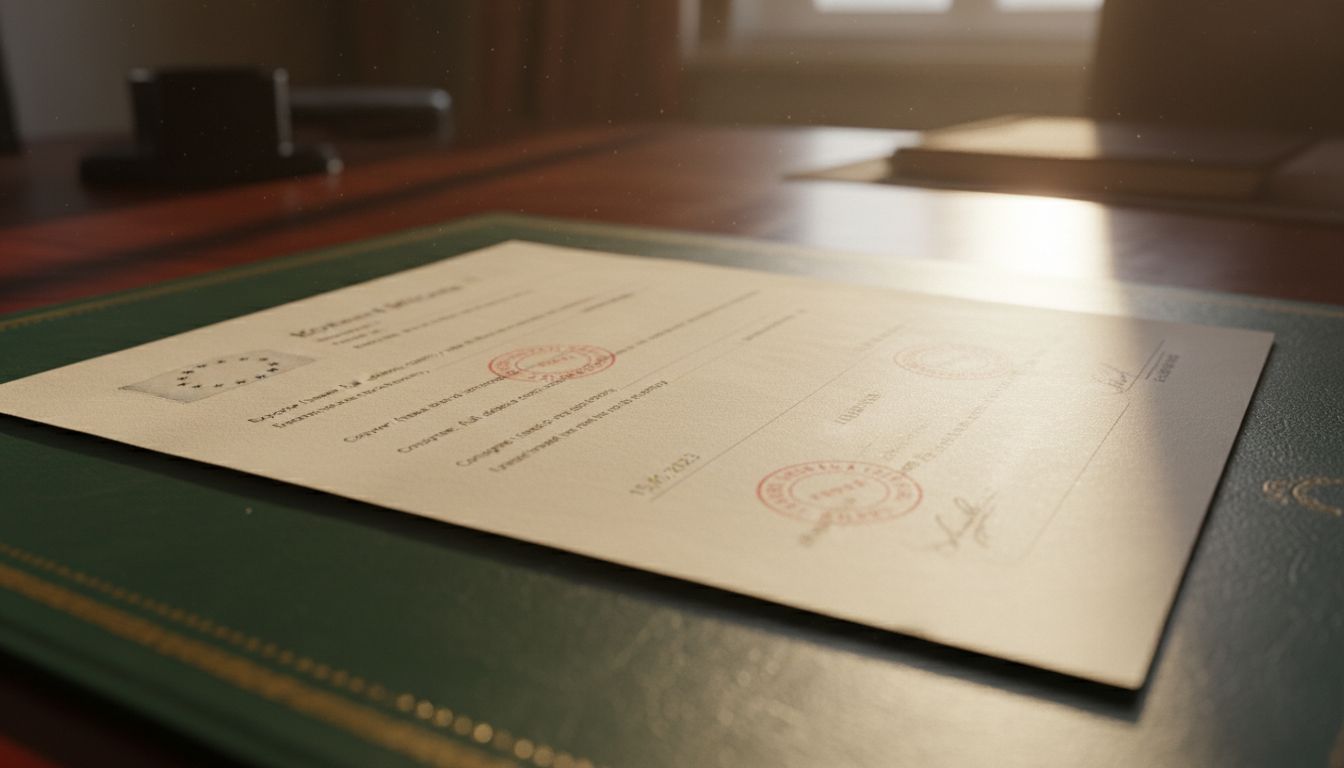
ATR Certificate: EU-Türkiye Duty-Free Trade

Quick answer
An ATR certificate is a movement certificate used to facilitate duty-free trade between the European Union and Türkiye under their Customs Union agreement. It serves as proof of preferential origin, enabling EU businesses to benefit from reduced or zero customs duties when importing from or exporting to Türkiye.
DCheck preferential origin — free, no sign-up to try.Key takeaways
- The ATR certificate confirms that goods traded between the EU and Türkiye qualify for preferential tariff treatment under the Customs Union.
- It applies mainly to businesses importing or exporting goods between the EU single market and Türkiye.
- The certificate helps avoid customs duties, reducing costs and administrative burdens.
- ATR certificates differ from EUR.1 certificates, which are used under different preferential trade agreements.
- Special rules govern the use of ATR certificates in free zones within Türkiye.
- EU businesses must ensure compliance with origin criteria and proper documentation to use ATR certificates effectively.
What is an ATR Certificate?
An ATR certificate is a specific type of movement certificate used in trade between the European Union and Türkiye. It certifies that the goods concerned originate in either the EU or Türkiye and thus qualify for preferential tariff treatment under the Customs Union established between the two parties. The ATR certificate serves as proof of preferential origin, allowing goods to be imported or exported with reduced or zero customs duties, facilitating smoother and more cost-effective trade flows within the EU-Türkiye trade framework [1].
The ATR certificate is issued by the customs authorities of the exporting party and accompanies the goods during transit. It confirms that the goods meet the origin criteria set out in the Customs Union agreement and related regulations. This certificate is essential for businesses seeking to benefit from the duty-free or reduced-duty status when trading between the EU and Türkiye.
Who Needs an ATR Certificate?
The ATR certificate primarily concerns businesses engaged in cross-border trade between the EU single market and Türkiye. This includes:
- EU importers receiving goods from Türkiye who want to claim preferential tariff treatment.
- EU exporters sending goods to Türkiye under the Customs Union framework.
- Turkish businesses exporting to the EU or importing from the EU, where preferential treatment is claimed.
In practice, any company operating within the EU single market that imports goods from Türkiye and wants to benefit from the Customs Union’s preferential tariff arrangements may require an ATR certificate. Similarly, exporters in the EU shipping to Türkiye can request an ATR certificate to demonstrate that their goods qualify for preferential treatment under the agreement [1:1].
The certificate is particularly relevant when customs authorities require proof of origin to apply the preferential tariff. While the Customs Union generally removes customs duties on industrial goods, the ATR certificate ensures compliance with the rules of origin and supports transparency in customs procedures.
Benefits of Using an ATR Certificate
Using an ATR certificate offers several advantages to EU businesses trading with Türkiye:
- Duty-Free or Reduced Duty Access: Goods accompanied by an ATR certificate benefit from preferential tariff treatment, reducing import costs and improving competitiveness.
- Simplified Customs Procedures: The certificate facilitates customs clearance by providing clear proof of origin, reducing delays and administrative burdens.
- Legal Certainty: It ensures compliance with the Customs Union rules of origin, helping to avoid disputes or penalties related to incorrect origin claims.
- Trade Facilitation: The ATR certificate supports smooth movement of goods by certifying origin under the Customs Union, which is crucial for supply chain efficiency.
- Cost Savings: By reducing or eliminating customs duties, businesses can lower overall import costs and improve profit margins.
These benefits make the ATR certificate a valuable tool for EU companies engaged in trade with Türkiye, especially those dealing with significant volumes or complex supply chains [1:2].
How to Obtain and Use an ATR Certificate
To obtain an ATR certificate, an exporter or their authorised representative must apply to the customs authorities in the exporting country—either in the EU or Türkiye. The application involves:
- Verifying Origin Criteria: The goods must meet the rules of origin defined under the Customs Union agreement to qualify for an ATR certificate.
- Submitting Documentation: The applicant provides evidence supporting the origin claim, such as production records, supplier declarations, or invoices.
- Customs Authority Review: The customs office examines the documentation and, if satisfied, issues the ATR certificate.
- Using the Certificate: The ATR certificate accompanies the goods during shipment and is presented to the customs authorities of the importing party to claim preferential treatment.
EU businesses should ensure that their customs declaration includes the ATR certificate number or reference to the certificate to facilitate tariff preferences. The certificate must be accurate and correspond to the goods shipped, as incorrect or fraudulent certificates can lead to penalties or loss of preferential treatment [1:3].
The ATR certificate remains valid for a specified period, usually linked to the shipment date, and must be kept on file by the importer or exporter for potential customs audits.
ATR Certificates and Free Zones
Special provisions apply to goods passing through free zones in Türkiye when traded under the Customs Union framework. According to the relevant Council Decisions, Turkey must ensure that products traded under cover of a proof of origin, such as the ATR certificate, which transit through free zones, are not substituted by other goods and do not undergo handling other than normal operations to prevent deterioration [2][3][4][5][6][7].
However, if products originating in Türkiye are imported into a free zone and undergo treatment or processing, the Turkish authorities may issue a new movement certificate EUR.1 upon the exporter’s request, provided the processing complies with the provisions of the relevant regional convention. This means that while the ATR certificate is primarily used for EU-Türkiye trade, the EUR.1 certificate may be issued in specific circumstances related to free zones and further processing [2:1][3:1][4:1][5:1][6:1][7:1].
EU businesses should be aware of these nuances when goods transit free zones in Türkiye, as it may affect the type of certificate required and the applicable customs procedures.
ATR Certificates vs. EUR.1 Certificates
While both ATR and EUR.1 certificates serve as proofs of preferential origin, they apply in different contexts and trade agreements:
- ATR Certificate: Used exclusively for trade between the EU and Türkiye under their Customs Union. It certifies that goods qualify for preferential treatment without customs duties on industrial products.
- EUR.1 Certificate: Used under various other preferential trade agreements involving the EU, such as agreements with Mediterranean countries, EFTA states, and certain other partners. It certifies preferential origin under those agreements and may be issued after processing in free zones or upon specific requests.
The ATR certificate is generally simpler and specific to EU-Türkiye trade, while the EUR.1 certificate covers a broader range of preferential agreements and scenarios, including when goods undergo processing in free zones [2:2][3:2][4:2][5:2][6:2][7:2][1:4][8].
EU businesses should verify which certificate applies to their trade operations depending on the origin of goods, destination, and applicable preferential agreements. Using the correct certificate is critical to securing preferential tariff treatment and avoiding customs complications.
Key Considerations for EU Businesses
EU companies trading with Türkiye should keep the following points in mind regarding ATR certificates:
- Origin Compliance: Ensure goods meet the rules of origin under the Customs Union to qualify for an ATR certificate. This includes verifying production processes and materials used.
- Proper Documentation: Maintain accurate records and supporting documents to substantiate origin claims and facilitate customs inspections.
- Customs Authority Procedures: Apply for the ATR certificate through the relevant national customs authority, following their procedural requirements.
- Free Zone Transit: Be aware of special rules if goods transit or undergo processing in Turkish free zones, which may require additional certificates such as EUR.1.
- Validity and Retention: Keep ATR certificates and related documents for the period required by customs authorities for audit purposes.
- Customs Declaration: Include references to the ATR certificate in customs declarations to benefit from preferential treatment.
- Stay Updated: Regulations may evolve, so confirm the current rules and procedures with the relevant national competent authority or official sources.
By adhering to these considerations, EU businesses can optimise their trade operations with Türkiye, leveraging the ATR certificate to reduce costs and ensure compliance [1:5][8:1].
Next steps
- Confirm whether your goods qualify under the EU-Türkiye Customs Union rules of origin.
- Apply to your national customs authority for an ATR certificate before exporting or importing.
- Ensure all supporting documents proving origin are accurate and readily available.
- Include the ATR certificate reference in your customs declarations to claim preferential tariffs.
- Monitor shipments passing through Turkish free zones and verify if additional certificates like EUR.1 are required.
FAQ
What is an ATR certificate and what does it do?
An ATR certificate is a movement certificate used in trade between the EU and Türkiye. It certifies that goods qualify for preferential tariff treatment under the Customs Union, enabling duty-free or reduced-duty imports and exports [1:6].
How much does a Certificate of Origin cost?
The cost of a Certificate of Origin, including the ATR certificate, varies depending on the issuing customs authority and national procedures. Businesses should consult their relevant national competent authority for precise fee information [1:7].
What are the documents needed for a customs declaration?
Documents typically include the ATR certificate (or other proof of origin), commercial invoice, packing list, transport documents, and any additional certificates required by customs. Supporting evidence for origin claims should also be available [1:8].
Can you provide an example of a declaration of preferential origin?
A declaration of preferential origin is a statement by the exporter or producer confirming that the goods meet the origin criteria under the Customs Union. It may be included on invoices or other commercial documents as permitted by customs regulations [8:2].
Is an ATR certificate a proof of origin?
Yes, the ATR certificate serves as proof of preferential origin for goods traded between the EU and Türkiye under the Customs Union, enabling preferential tariff treatment [1:9][8:3].
What is the difference between an ATR and EUR.1 certificate?
The ATR certificate is specific to EU-Türkiye trade under the Customs Union, while the EUR.1 certificate applies to other preferential trade agreements involving the EU and certain countries. EUR.1 may also be issued after processing in free zones, whereas ATR is primarily for direct trade between the EU and Türkiye [2:3][1:10][8:4].
Sources
Could your goods qualify for a preferential rate?
The FTA & Origin Checker tells you whether an agreement covers your goods, which origin rule applies, and what proof you need to claim it.