Chamber of Commerce Certificates: EU Trade Compliance

Quick answer
A chamber of commerce certificate is an official document issued by a chamber of commerce or authorised body that certifies the origin, authenticity, or compliance of goods for trade within or with the European Union. It is often required to benefit from preferential tariffs, comply with specific trade regulations, or meet countervailing duty requirements.
DAsk the AI Customs Broker — free, no sign-up to try.Key takeaways
- Chamber of commerce certificates verify origin, authenticity, or compliance of goods for EU trade.
- Export undertaking certificates are mandatory for certain Chinese photovoltaic modules under EU countervailing duties.
- Movement certificates such as EUR.1 and EUR-MED enable preferential tariff treatment under trade agreements.
- Certificates for specific goods may be required to claim tariff preferences or comply with EU regulations.
- Certificates must meet strict formal requirements, including no alterations and proper endorsements.
- Verification of certificates’ authenticity may be requested by customs authorities to ensure compliance.
What is a Chamber of Commerce Certificate?
A chamber of commerce certificate is an official attestation issued by a recognised chamber of commerce or authorised body in the exporting country. It certifies certain facts about goods, most commonly their origin, but also their authenticity or compliance with specific trade conditions. Such certificates facilitate customs clearance, enable preferential tariff treatment, or satisfy regulatory requirements within the European Union single market.
The certificates are typically printed on official paper, bear the stamp and signature of the issuing authority, and include detailed information about the exporter, the goods, and the consignment. They serve as proof for customs authorities and other stakeholders that the goods meet the necessary conditions for import, export, or transit within the EU.
In practice, an EU business importing or exporting goods may be required to present a chamber of commerce certificate to the relevant Member State customs authority to benefit from tariff preferences or comply with trade defence measures.
When are Chamber of Commerce Certificates Required for EU Trade?
Chamber of commerce certificates are required in various contexts of EU trade compliance:
-
Countervailing Duties on Chinese Photovoltaic Modules:
For imports of crystalline silicon photovoltaic modules and key components originating in or consigned from the People’s Republic of China, an Export Undertaking Certificate issued by the China Chamber of Commerce for Import & Export of Machinery & Electronic Products (CCCME) must accompany the commercial invoice. This certificate confirms compliance with the undertaking accepted by the European Commission and includes detailed information such as the TARIC additional code, product codes, quantities in watts, and an expiry date of three months after issuance [1]. -
Preferential Trade under Free Trade Agreements:
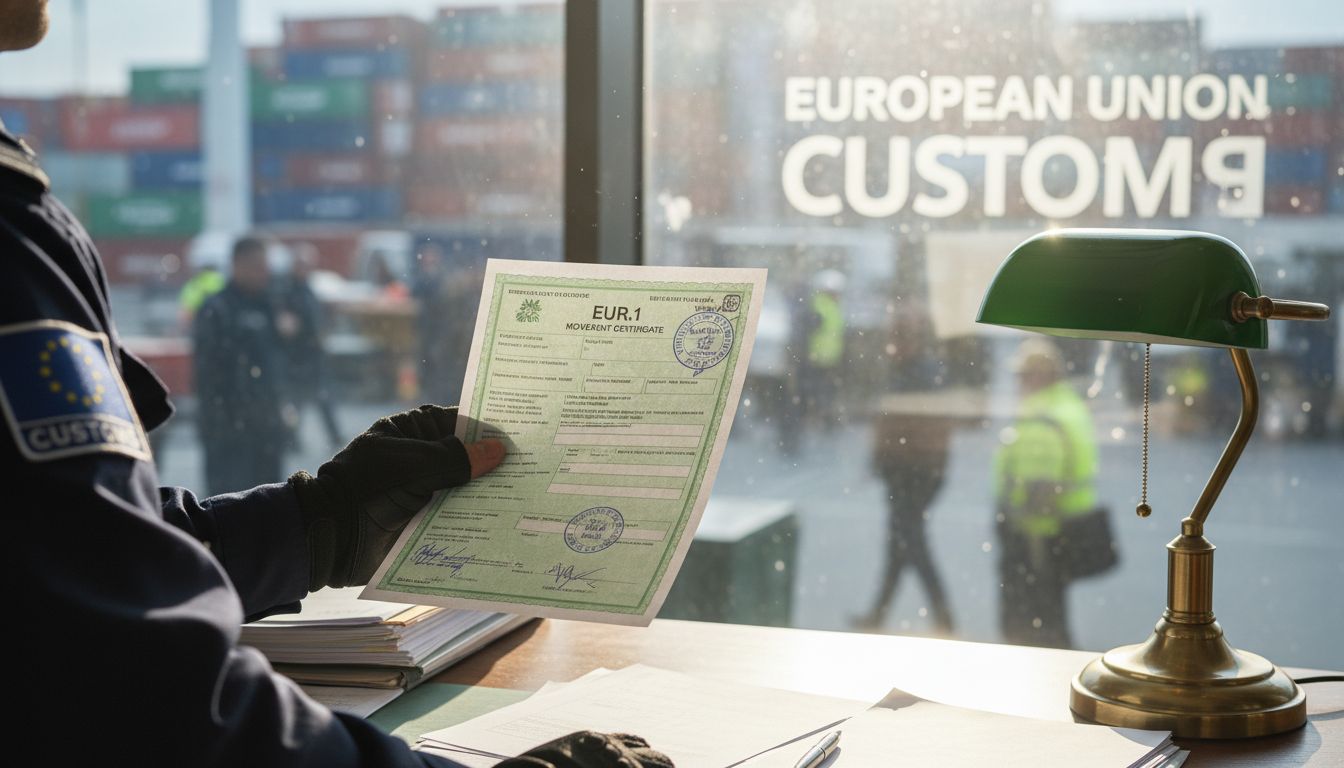
Movement certificates such as EUR.1 or EUR-MED are required to claim preferential tariff treatment under various EU trade agreements. These certificates confirm that the goods originate in a country or territory benefiting from a preferential arrangement with the EU, allowing reduced or zero customs duties [2][3][4][5]. -
Tariff Preferences for Specific Goods:
Certain products, including fresh table grapes, tobacco, and nitrate, require presentation of specific certificates to benefit from preferential tariffs based on their nature, quality, or authenticity [6].
In all these cases, the chamber of commerce certificate is a key document for customs clearance and compliance with EU trade regulations.
Key Information on Export Undertaking Certificates (China PV Modules)
Under Commission Implementing Regulation (EU) 2017/366, imports of crystalline silicon photovoltaic modules and key components from China must be accompanied by an Export Undertaking Certificate issued by the CCCME. This certificate is crucial for compliance with the countervailing duties regime established by the EU.
The certificate must include:
- The name, address, and contact details of CCCME.
- The name of the exporting company as listed in the relevant EU Implementing Decision.
- The commercial invoice number and date.
- The TARIC additional code for customs clearance.
- Detailed description of the goods, including product code number (PCN), technical specifications, company product code (if applicable), and CN code.
- The quantity exported expressed in watts.
- The certificate number and expiry date (valid for three months).
- The name and signature of the CCCME official, including a signed declaration certifying the accuracy of the information and compliance with the undertaking.
- The date of issue and the official seal of CCCME [1:1].
EU importers must ensure that this certificate accompanies the shipment and is valid at the time of customs declaration to avoid delays or penalties.
Movement Certificates (EUR.1, EUR-MED) and Preferential Trade
Movement certificates such as EUR.1 and EUR-MED are issued to certify the preferential origin of goods under trade agreements between the EU and partner countries or territories. These certificates enable EU businesses to benefit from reduced or zero customs duties when importing or exporting qualifying goods.
The certificate application includes:
- Exporter and consignee details.
- Countries or territories of origin and destination.
- Description of goods with commercial details sufficient to identify them.
- Transport details and invoice references.
- Exporter’s declaration confirming that the goods meet the conditions for preferential treatment.
- Submission of supporting documents such as import documents, manufacturer’s declarations, or previous movement certificates [2:1][3:1][4:1][5:1].
The certificates must be issued by the competent customs office or authorised body in the exporting country. They must be completed without erasures or overwriting, and any corrections must be properly initialled and endorsed by customs authorities to maintain validity.
If a consignment is split, photocopies of the original certificate may be issued for each part, with customs endorsement specifying the quantity covered by each copy [6:1].
Certificates for Specific Goods (Tariff Preferences)
Certain goods require specific certificates to claim tariff preferences or meet EU quality and authenticity standards. For example, fresh table grapes, tobacco, and nitrate products must be accompanied by certificates that confirm their nature, quality, or authenticity to benefit from preferential tariff treatment [6:2].
These certificates must:
- Follow the prescribed layout as established by EU regulations.
- Be printed on white paper of specified weight.
- Be completed in one of the EU’s official languages or the exporting country’s official language.
- Bear the stamp and signature of the authorised issuing body.
- Be valid for a defined period, generally 10 months from the date of issue (24 months for tobacco) [6:3].
EU businesses should verify the specific certificate requirements for the goods they trade, as failure to provide the correct certificate may result in loss of preferential treatment or customs clearance issues.
General Requirements for All Certificates
All chamber of commerce certificates used in EU trade must comply with strict formal requirements to ensure their authenticity and acceptance by customs authorities:
- Certificates must not contain erasures or overwritten words. Any necessary corrections must be made by deleting incorrect details and adding corrections, each initialled by the issuer and endorsed by the customs authorities of the issuing country [2:2][3:2][4:2][5:2].
- No blank spaces should remain between entered items; each item must be preceded by an item number.
- A horizontal line must be drawn immediately below the last item, and any unused space must be struck through to prevent later additions [2:3][3:3][4:3][5:3].
- Goods must be described in sufficient detail according to commercial practice to enable their identification by customs [2:4][3:4][4:4][5:4].
- Certificates must bear the place and date of issue, the signature of the authorised person, and the official stamp of the issuing body [6:4].
- The exporter’s signature is required on certificates such as the certificate of origin Form A, which must also indicate the date of issue and the name of the issuing authority [7].
EU businesses should ensure these requirements are met before submitting certificates to customs to avoid rejection or delays.
Verification and Authenticity of Certificates
Customs authorities in the EU Member States may verify the authenticity and accuracy of chamber of commerce certificates presented for import or export. Verification involves confirming that the certificate was issued by the indicated authority and that the information contained is accurate.
If a certificate does not meet authenticity or accuracy requirements, customs may append remarks or request further verification. This process is essential to prevent fraud and ensure compliance with EU trade rules [2:5][3:5].
EU businesses should retain all supporting documents related to the certificate, such as commercial invoices, manufacturing declarations, and transport documents, as these may be requested by customs authorities during verification.
Next steps
- Confirm whether your goods require a chamber of commerce certificate for EU import or export, based on their origin, nature, and applicable trade agreements.
- Obtain the correct type of certificate (e.g., Export Undertaking Certificate, EUR.1, EUR-MED) from the authorised chamber of commerce or competent customs office in the exporting country.
- Ensure the certificate is completed accurately, with no erasures, proper endorsements, and all required information including exporter details, goods description, and signatures.
- Retain supporting documents such as commercial invoices and declarations to substantiate the certificate’s claims for customs verification.
- Present the certificate to the relevant Member State customs authority at the time of customs declaration to claim preferential tariffs or comply with trade defence measures.
FAQ
How can I get a Chamber of Commerce certificate?
You can obtain a chamber of commerce certificate by applying to the recognised chamber of commerce or authorised issuing body in the exporting country. The application typically requires detailed information about the goods and exporter, and may require supporting documents such as invoices or manufacturing declarations [2:6][3:6][4:5][5:5].
Where do you get a certificate of origin?
A certificate of origin is issued by the chamber of commerce or competent customs authority in the country where the goods originate. It certifies the origin of the goods for customs and preferential trade purposes [2:7][7:1].
What is a Chamber of Commerce used for?
A chamber of commerce certificate is used to certify the origin, authenticity, or compliance of goods in international trade. It facilitates customs clearance, enables preferential tariff treatment, and ensures compliance with trade regulations within the EU single market.
What is an EUR.1 certificate?
An EUR.1 certificate is a movement certificate used to certify the preferential origin of goods under trade agreements between the EU and partner countries. It allows businesses to benefit from reduced or zero customs duties on qualifying goods [2:8][4:6][5:6].
How long is a certificate of origin valid?
The validity period varies depending on the certificate type and product. Generally, certificates are valid for 10 months from the date of issue, except for certain products like tobacco, which may have a validity of 24 months [6:5].
Can a certificate of origin be altered?
Certificates must not contain erasures or overwritten words. Any alteration must be made by deleting incorrect particulars and adding corrections, each initialled by the person who completed the certificate and endorsed by the customs authorities of the issuing country or territory [2:9][3:7][4:7][5:7].
Sources
Still need the answer for your own shipment?
Ask the AI Customs Broker. It classifies, values and clears your goods against the live EU rules, and cites the regulation behind every answer.