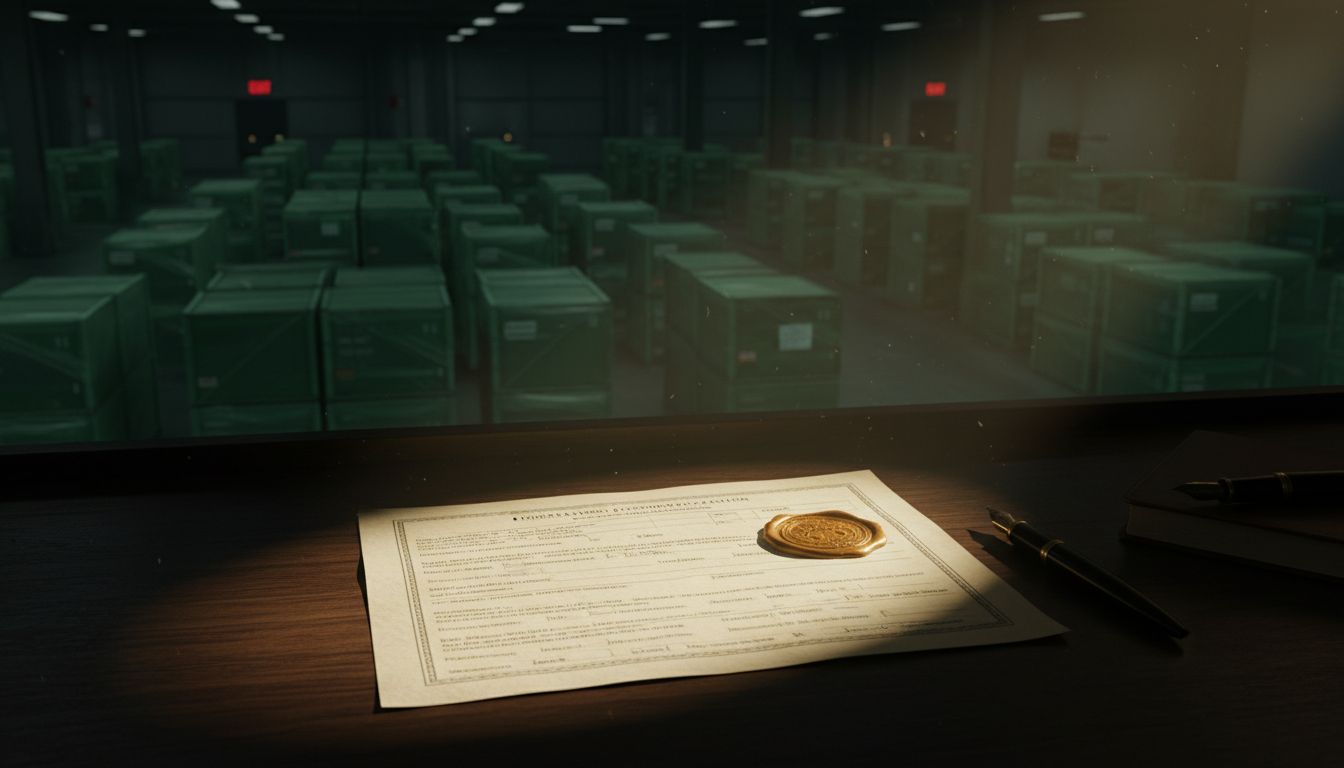
Origin Declarations: EU Business Compliance Guide

Quick answer
An origin declaration is a statement made by an EU business confirming the preferential origin of goods, enabling access to reduced or zero customs duties under trade agreements. It must be issued by the exporter or producer when required by EU customs legislation and trade agreements.
DAsk the AI Customs Broker — free, no sign-up to try.Key takeaways
- Origin declarations confirm the preferential origin of goods for customs purposes within the EU.
- They must be issued by exporters or producers established in the EU or in a preferential trade partner country.
- Origin declarations are required when claiming preferential tariff treatment under EU trade agreements.
- The declaration must contain specific information including the origin statement, exporter details, and commodity codes.
- Restrictive measures may impact the validity or use of origin declarations.
- Businesses must retain origin declarations and supporting documents for at least three years.
- Non-compliance can lead to customs penalties, loss of preferential treatment, and reputational damage.
What is an Origin Declaration?
An origin declaration is a written statement made by an exporter or producer that certifies the preferential origin of goods. It is used to claim preferential tariff treatment under the EU’s trade agreements with third countries or within the EU single market. The origin declaration enables customs authorities to verify that the goods meet the rules of origin criteria set out in the relevant trade agreement or EU legislation.
In practice, an origin declaration is typically included on commercial documents such as invoices, delivery notes, or other transport documents. It serves as proof that the goods qualify for preferential customs duties, allowing EU businesses to benefit from reduced import tariffs or exemptions when importing goods from partner countries or when exporting goods within the EU single market.
The origin declaration is a key compliance document in customs procedures and must be accurate and complete to avoid delays or penalties [1].
Who Must Issue Origin Declarations?
Origin declarations must be issued by the exporter or producer who is established in the territory of the EU or in the country with which the EU has a preferential trade agreement. This means:
- EU exporters issuing origin declarations for goods exported from the EU to a preferential partner country.
- Producers in the EU or in a partner country issuing origin declarations to certify the origin of goods they have manufactured or processed.
The person issuing the origin declaration must be able to substantiate the origin of the goods and comply with the rules of origin applicable under the relevant trade agreement or EU legislation. This includes maintaining sufficient documentation to prove the origin status of the goods.
In some cases, authorized exporters or approved exporters may be allowed to issue origin declarations without further supporting documents, subject to national customs authority approval. However, the obligation to ensure the accuracy of the declaration remains with the issuer [1:1].
When are Origin Declarations Required?
Origin declarations are required when an EU business claims preferential tariff treatment for goods under an EU trade agreement or preferential arrangement. This typically occurs:
- At importation into the EU when goods originate from a partner country with which the EU has a trade agreement.
- At exportation from the EU to a partner country under a preferential trade agreement.
- When goods move within the EU single market and origin must be declared for customs or trade compliance purposes.
The specific requirement to provide an origin declaration depends on the customs procedure and the preferential arrangement applied. For example, when importing goods under a preferential tariff, the customs declaration must be accompanied by an origin declaration issued by the exporter or producer.
The origin declaration is generally valid for 12 months from the date of issue, allowing the consignee to claim preferential treatment within that period. Businesses must ensure that origin declarations are issued timely and retained for the required period.
In some cases, origin declarations are also required to comply with restrictive measures or sanctions regimes, where origin affects the permissibility of trade. For instance, restrictive measures concerning specific countries or entities may require origin declarations to verify that goods are not originating from sanctioned sources [2][1:2].
Key Information for Origin Declarations
An origin declaration must contain specific information to be valid for customs purposes. The key elements include:
- A statement confirming the preferential origin of the goods, such as:
“The goods listed in this document originate in [country].” - The name and address of the exporter or producer issuing the declaration.
- A description of the goods covered by the declaration, including commodity codes (HS codes) where applicable.
- The date of issue of the origin declaration.
- The signature or identification of the person making the declaration (this may be electronic or written depending on national rules).
The declaration can be made on commercial documents such as invoices or delivery notes, and must clearly identify the goods concerned. In the EU single market context, the origin declaration facilitates customs clearance and preferential tariff claims.
Businesses should ensure that the information is accurate and consistent with the customs declaration and other shipping documents. Any discrepancies may trigger customs queries or delays.
Where applicable, the origin declaration must comply with the format and content requirements set out in the relevant EU trade agreement or implementing regulations [1:3].
Impact of Restrictive Measures on Origin
Restrictive measures adopted by the EU, such as sanctions or embargoes, may affect the use and acceptance of origin declarations. These measures can restrict trade with certain countries, entities, or persons, and require additional verification of origin to ensure compliance.
For example, Council Implementing Regulation (EU) 2016/1687 and related amendments impose restrictive measures concerning the situation in Libya, Syria, and other jurisdictions. These regulations may require origin declarations to confirm that goods are not originating from or linked to sanctioned entities or territories [2:1][1:4].
EU businesses must be aware that origin declarations alone may not suffice to comply with restrictive measures. Additional due diligence, screening, or licences may be required depending on the nature of the goods and the destination or origin country.
Failure to properly account for restrictive measures in origin declarations can lead to enforcement actions, including fines and suspension of customs privileges.
Maintaining Compliance and Records
EU businesses issuing or relying on origin declarations must maintain proper records to demonstrate compliance. This includes:
- Retaining origin declarations and related documents for at least three years from the date of issue.
- Keeping supporting evidence such as production records, purchase invoices, transport documents, and customs declarations.
- Ensuring that origin declarations are issued only when the goods meet the applicable rules of origin.
- Monitoring changes in trade agreements, customs legislation, and restrictive measures that may affect origin declaration requirements.
- Cooperating with customs authorities during audits or controls by providing requested documentation promptly.
The relevant national competent authority in the Member State where the business is established oversees compliance and may conduct checks to verify origin declarations.
Maintaining robust compliance procedures and documentation is essential to avoid disputes, delays, and penalties related to origin declarations [1:5].
Consequences of Non-Compliance
Non-compliance with origin declaration requirements can have significant consequences for EU businesses, including:
- Denial of preferential tariff treatment, resulting in higher customs duties and increased costs.
- Customs penalties and fines imposed by national authorities.
- Delays in customs clearance and disruption of supply chains.
- Reputational damage due to failure to comply with trade and customs regulations.
- Potential legal liability if origin declarations are found to be false or misleading.
Businesses should treat origin declarations as critical compliance documents and ensure accuracy, completeness, and timely issuance.
In cases of uncertainty, it is advisable to confirm the specific requirements and procedures with the relevant national competent authority to mitigate risks.
FAQ
What is a declaration of origin?
A declaration of origin is a statement by an exporter or producer certifying that goods originate in a particular country or territory, enabling preferential customs treatment under trade agreements [1:6].
What is a declaration of origin in the UK?
While this guide focuses on the EU, generally, a declaration of origin in the UK serves a similar purpose as in the EU: to certify the preferential origin of goods for customs purposes. Specific UK rules should be consulted separately.
Can you provide an example of a statement of origin?
An example statement of origin is:
“The goods listed in this document originate in [country].”
This statement must be accompanied by the name and address of the exporter or producer, date, and description of the goods [1:7].
What is a Certificate of Origin in the UK?
A Certificate of Origin is a formal document issued by a chamber of commerce or other authorized body certifying the origin of goods. It differs from an origin declaration, which is a statement made by the exporter or producer. This guide focuses on origin declarations within the EU context.
Next steps
- Confirm whether your goods qualify for preferential origin under the relevant EU trade agreement.
- Prepare and issue an origin declaration containing all required information for each shipment.
- Retain origin declarations and supporting documents for at least three years for customs verification.
- Monitor applicable restrictive measures that may affect origin declaration requirements and compliance.
- Coordinate with the relevant national competent authority to verify procedural compliance and address any queries.
Sources
Still need the answer for your own shipment?
Ask the AI Customs Broker. It classifies, values and clears your goods against the live EU rules, and cites the regulation behind every answer.