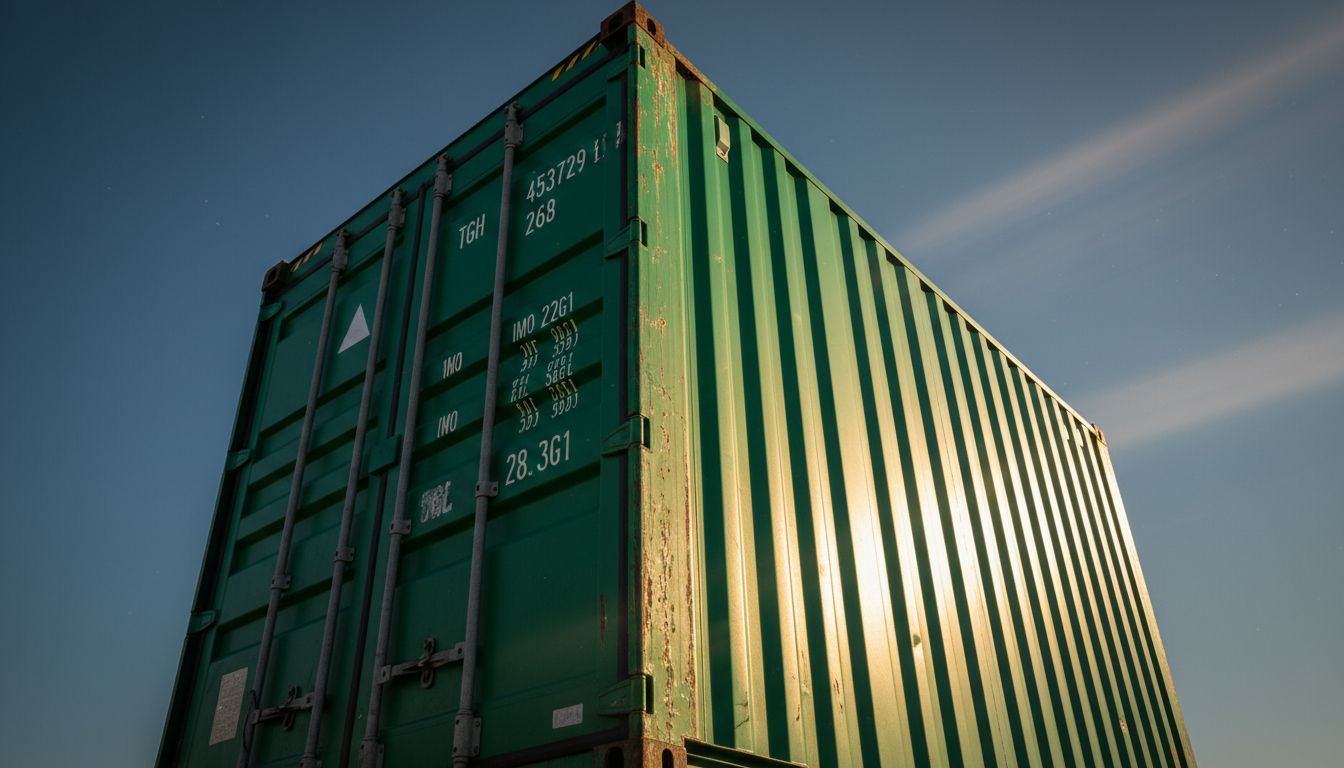
EU Customs Transit: Authorised Consignee Status

Quick answer
Authorised consignee status allows an EU business to receive goods under the Union transit procedure at a designated authorised place, enabling simplified customs formalities and faster release of goods within the EU single market [1].
DAsk the AI Customs Broker — free, no sign-up to try.Key takeaways
- Authorised consignee status applies to economic operators regularly receiving goods under the Union transit procedure [1:1].
- This status permits goods to be received at an authorised place, ending the transit procedure without the need for a customs declaration at the office of destination [1:2].
- Applying requires meeting conditions similar to those for Authorised Economic Operator (AEO) status, including reliability and compliance [2].
- Simplified transit procedures exist for air, maritime, and rail transport modes, utilising electronic data exchange to facilitate customs controls [3].
- Electronic Data Interchange (EDI) is integral to the Union Customs Code (UCC) framework, enabling standardised and secure information exchange [4][5].
- Maintaining authorised consignee status requires strict compliance with customs obligations and best practices to avoid penalties or revocation [1:3][2:1].
Who Needs Authorised Consignee Status?
Authorised consignee status is primarily relevant for EU businesses that regularly import goods under the Union transit procedure and wish to benefit from simplified customs formalities. This status allows the consignee to receive goods directly at an authorised place within the EU customs territory, thereby ending the transit procedure without the need for a customs declaration at the customs office of destination [1:4].
Typically, this status is sought by importers, warehouses, logistics operators, or distribution centres that handle significant volumes of goods moving under transit. It is especially beneficial for those involved in cross-border trade within the EU single market who require efficient customs clearance to maintain supply chain fluidity.
To qualify, the economic operator must demonstrate reliability, financial solvency, and compliance with customs rules, similar to the criteria for Authorised Economic Operator (AEO) status. The authorisation is granted by the relevant national customs authority in the Member State where the authorised place is located [2:2].
Benefits of Authorised Consignee Status for EU Importers
Holding authorised consignee status confers several practical advantages for EU importers:
- Simplified Customs Formalities: Goods arriving under the transit procedure can be received at the authorised place without lodging a full customs declaration at the destination customs office, reducing administrative burden [1:5].
- Faster Release of Goods: By ending the transit procedure at the authorised place, importers can expedite the release of goods for free circulation or other customs procedures, improving supply chain efficiency [1:6].
- Reduced Risk of Delays: The status allows for better planning and coordination with customs authorities, minimising the risk of delays caused by customs inspections or paperwork issues.
- Facilitation of Electronic Data Exchange: Authorised consignees benefit from streamlined electronic communication with customs authorities, including the use of systems compliant with the Union Customs Code (UCC) for transit and proof of customs status [4:1][5:1].
- Enhanced Control and Security: Customs authorities apply risk-based controls, but authorisation holders are generally considered lower risk, which can reduce the frequency and intensity of inspections [2:3].
For businesses using digital logistics solutions, including edi express bol systems, authorised consignee status integrates well with electronic data interchange processes, enabling seamless tracking and customs clearance [3:1].
Applying for Authorised Consignee Status: Key Requirements
To obtain authorised consignee status, an EU business must submit an application to the relevant national customs authority. The application process involves demonstrating compliance with specific conditions:
- Reliability: The applicant must have a proven track record of compliance with customs legislation, including accurate record-keeping and timely submission of customs declarations [2:4].
- Financial Solvency: Adequate financial standing is required to cover potential customs debts arising from the transit procedure [2:5].
- Security and Safety Standards: The business must meet security criteria to prevent misuse of the transit procedure, including safeguarding goods and data [2:6].
- Use of Electronic Systems: The applicant should be capable of using electronic data exchange systems compliant with the UCC, facilitating efficient communication with customs authorities [4:2][5:2].
- Infrastructure and Procedures: Suitable premises and operational procedures must be in place to receive goods under transit and ensure proper customs control [1:7].
Once authorised, the consignee can receive goods moved under the Union transit procedure at the authorised place, ending the transit procedure in accordance with Article 233(2) of the Union Customs Code [1:8].
The authorisation is granted under Regulation (EU) No 952/2013 and its implementing acts, notably Commission Delegated Regulation (EU) 2015/2446 and Commission Implementing Regulation (EU) 2015/2447, which set out detailed procedural rules [1:9][3:2].
Simplified Transit Procedures: Air, Maritime, and Rail
The Union Customs Code recognises the specificities of different transport modes and provides tailored simplifications for transit procedures:
- Air Transport: Customs administrations may use data already available from air carriers to serve as transit declarations, reducing duplication and speeding up customs controls [3:3].
- Maritime Transport: Similar simplifications apply, allowing maritime carrier data to be used as transit declarations, facilitating the movement of goods in containerised or packaged form [3:4].
- Rail Transport: Electronic data-processing techniques are adapted to the liberalised rail market, enabling harmonised and efficient transit procedures [3:5].
These simplifications are designed to balance the effectiveness of customs controls with the legitimate interest of unhindered trade. Risk analysis for security and safety is conducted prior to the release of goods, with time limits that consider trade facilitation [3:6].
The use of electronic data interchange, including edi express bol systems, is integral to these procedures, enabling real-time communication between economic operators, carriers, and customs authorities [3:7].
Electronic Data Exchange and the UCC
The Union Customs Code (UCC) mandates the use of electronic systems for the exchange and storage of customs-related information to ensure harmonised and efficient procedures across the EU single market.
Key systems include:
- Proof of Customs Status: An electronic system facilitates the exchange and storage of information proving the customs status of Union goods, supporting authorised consignee activities [4:3].
- Standardised Information Exchange: Electronic communication systems are used for procedures such as inward and outward processing, transit, and commercial policy measures, ensuring timely updates and transparency [5:3].
For businesses utilising edi express bol solutions, these electronic data interchange systems enable seamless transmission of transport documents, customs declarations, and status updates, ensuring compliance with UCC requirements [5:4].
The integration of EDI in customs transit procedures enhances traceability, reduces errors, and supports risk-based customs controls, benefiting both economic operators and customs authorities.
Ensuring Compliance: Obligations and Best Practices
Holding authorised consignee status entails ongoing obligations to maintain compliance with customs regulations and best practices:
- Accurate Record-Keeping: Maintain detailed records of all goods received under transit, including transport documents and customs references, for audit and verification purposes [1:10].
- Timely Data Submission: Submit required electronic data and declarations within prescribed deadlines to the relevant customs authorities [2:7].
- Security Measures: Implement robust security protocols to safeguard goods and data against theft, loss, or misuse [2:8].
- Cooperation with Customs: Facilitate customs inspections and provide requested information promptly to avoid delays or penalties [1:11].
- Regular Review: Periodically review internal procedures and compliance status to ensure continued eligibility for authorised consignee status.
Failure to comply with obligations may result in suspension or revocation of the authorisation, impacting the ability to benefit from simplified transit procedures [2:9].
Next steps
- Confirm whether your business regularly receives goods under the Union transit procedure and assess the benefits of authorised consignee status.
- Prepare and submit an application for authorised consignee status to the relevant national customs authority, including evidence of compliance and operational readiness.
- Ensure your logistics and IT systems, including edi express bol platforms, support the required electronic data interchange with customs authorities.
- Implement and document security and compliance procedures to meet the conditions for maintaining authorised consignee status.
- Establish processes for timely submission of customs data and cooperation with customs controls to sustain your authorisation.
FAQ
Is EDI Express tracking reliable?
EDI Express tracking is generally reliable as it uses electronic data interchange systems compliant with EU customs regulations, enabling real-time updates and accurate tracking of goods during transit [5:5].
How to track EDI Express?
Tracking edi express bol shipments involves using the electronic data interchange platform provided by the logistics operator, which integrates with customs systems to provide status updates and movement confirmations [5:6].
What does EDI mean in shipping?
EDI (Electronic Data Interchange) in shipping refers to the electronic exchange of standardised documents and data between parties, such as transport documents, customs declarations, and status messages, facilitating efficient and compliant trade [5:7].
What is EDI trucking?
EDI trucking involves the use of electronic data interchange to communicate transport and customs information related to road freight shipments, enabling streamlined customs transit and logistics management within the EU [5:8].
Sources
Still need the answer for your own shipment?
Ask the AI Customs Broker. It classifies, values and clears your goods against the live EU rules, and cites the regulation behind every answer.