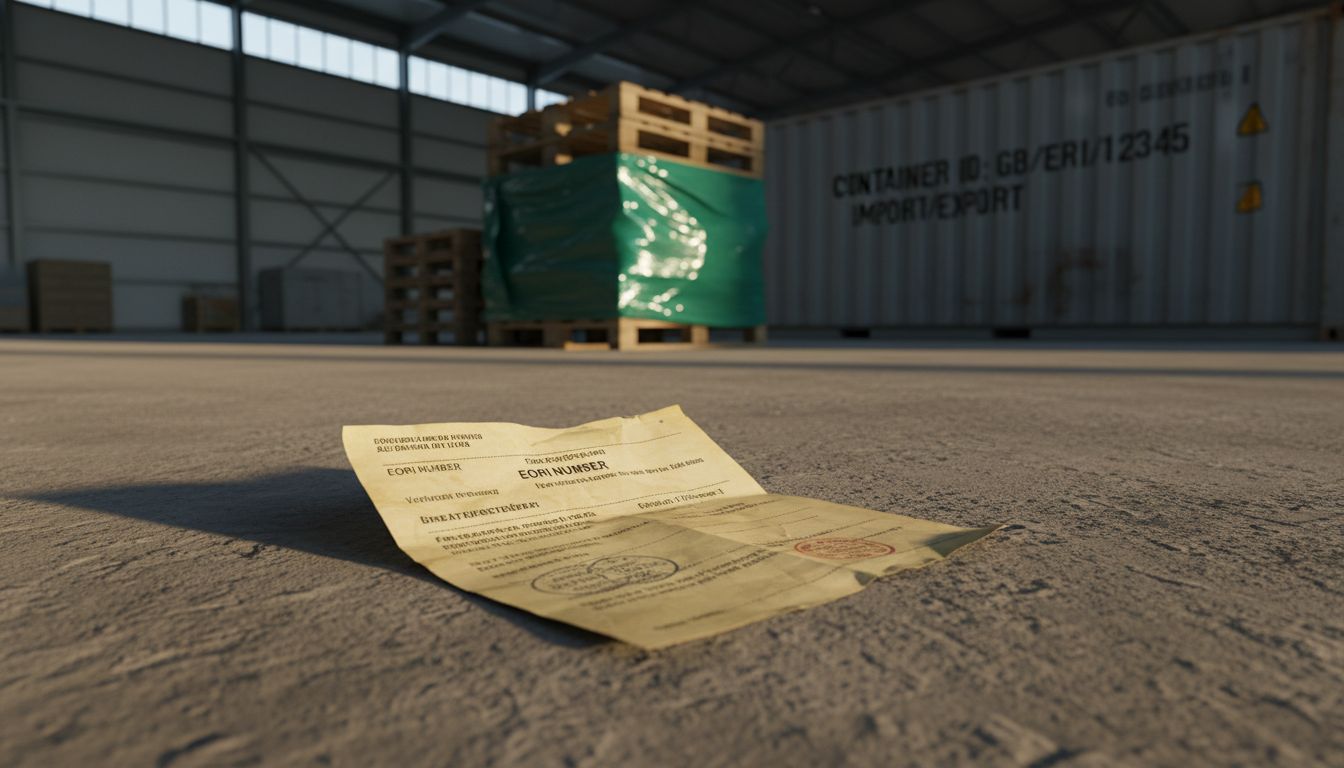
EORI Number: A Core Requirement for EU Importers

Quick answer
An EORI number is a unique identification number assigned to economic operators for customs purposes within the European Union. It is mandatory for businesses importing goods into the EU single market and plays a crucial role in customs declarations and compliance, including under the Carbon Border Adjustment Mechanism (CBAM).
DAsk the AI Customs Broker — free, no sign-up to try.Key takeaways
- The EORI number is a unique identifier for economic operators in the EU customs territory, essential for import and export activities [1].
- All businesses importing goods into the EU must have an EORI number before customs clearance [2].
- The EORI number is linked to customs declarations, commercial invoices, and compliance with EU trade regulations such as CBAM [2:1][3].
- Customs authorities use the EORI number to track imports, communicate data to the Commission, and verify compliance [2:2][3:1].
- Obtaining an EORI number involves registration with the customs authority of the Member State where the business is established [1:1][4].
- The EORI number must be included in customs declarations and commercial invoices to ensure smooth customs processing [5][6][7].
- The term “eccm number” is sometimes used informally but refers to the same EORI number in certain contexts.
What is an EORI Number and Why Do You Need One?
The EORI number, or Economic Operators Registration and Identification number, is a unique identification number assigned by a customs authority to an economic operator or other persons for customs purposes within the EU customs territory [1:2]. It serves as a single identifier across all EU Member States, simplifying customs procedures and ensuring traceability of goods entering or leaving the EU.
In practice, an EORI number is indispensable for any business involved in importing goods into the EU single market. Without it, customs authorities will not permit the clearance of goods for free circulation. The EORI number facilitates communication between the importer, customs authorities, and the European Commission, enabling efficient customs processing and compliance monitoring [2:3].
The EORI number also plays a critical role in newer regulatory frameworks such as the Carbon Border Adjustment Mechanism (CBAM), where it is used to identify importers and authorised declarants in customs declarations and reporting obligations [2:4].
Who Needs an EORI Number for EU Imports?
Any economic operator established in the EU who intends to import goods into the EU customs territory must obtain an EORI number [1:3]. This includes companies of all sizes and sectors engaged in commercial import activities. The requirement applies regardless of the volume or frequency of imports, ensuring that all importers are properly registered for customs purposes.
The EORI number is also necessary for authorised CBAM declarants, who are responsible for fulfilling reporting obligations under Regulation (EU) 2023/956 establishing the carbon border adjustment mechanism [2:5]. In cases where an importer does not have an EORI number, customs authorities must still communicate identifying information such as name and address to the Commission, but this is generally not a substitute for obtaining an EORI number [2:6].
Private individuals importing goods for personal use may be exempt from the EORI requirement, depending on the nature and quantity of goods, but businesses engaged in commercial importation must comply [1:4].
EORI and CBAM: A Critical Link for Importers
The Carbon Border Adjustment Mechanism (CBAM), established by Regulation (EU) 2023/956, imposes specific obligations on importers of certain goods to account for carbon emissions embedded in imported products [2:7]. The EORI number is a fundamental element in this process.
Customs authorities require the EORI number of the importer or the authorised CBAM declarant in all customs declarations related to CBAM goods. This enables the authorities to monitor imports, verify compliance with CBAM reporting obligations, and communicate relevant data to the European Commission and national competent authorities [2:8].
The customs authorities automatically transmit information including the EORI number, the CN code of the goods, quantity, country of origin, and customs procedure data to the Commission. This data exchange supports the surveillance mechanism designed to enforce CBAM rules effectively [2:9][3:2].
For EU businesses, this means that having a valid EORI number is not only a customs formality but a prerequisite for participating in the CBAM framework and avoiding delays or refusals at the border [2:10].
How Customs Authorities Use Your EORI Number
Customs authorities use the EORI number as a key identifier to track and process import and export transactions within the EU. When a customs declaration is submitted, the EORI number links the declaration to the economic operator, enabling authorities to verify the operator’s registration status and compliance history [1:5].
Under CBAM and other customs regulations, the EORI number facilitates the automatic exchange of information between customs authorities and the European Commission, ensuring transparency and enforcement of trade rules [2:11][3:3]. This includes the transmission of data on goods imported, such as the eight-digit CN code, quantities, and country of origin, all associated with the EORI number [2:12][3:4].
Moreover, customs authorities may share confidential information related to the EORI holder with competent national authorities to support enforcement actions and regulatory oversight [2:13].
For businesses, this means that the EORI number is central to all customs-related communications and controls, and maintaining accurate registration data is essential for compliance [4:1].
Obtaining and Managing Your EORI Number
EU businesses must apply for an EORI number through the customs authority of the Member State where they are established. The application process involves submitting company identification details and other relevant information required for customs registration [1:6].
Only one EORI number is assigned per legal entity, ensuring a unique identifier across the EU customs territory [4:2]. The format and structure of the EORI number follow standards set out in EU customs legislation, which also defines the data to be stored and exchanged electronically [4:3].
Once assigned, the EORI number must be maintained accurately, and any changes to registration data must be promptly communicated to the issuing customs authority. This ensures that customs authorities have up-to-date information for processing declarations and enforcement [4:4].
Businesses should note that the EORI number is a prerequisite for customs declarations and compliance with EU trade regulations, including CBAM. Failure to obtain or properly manage an EORI number can result in delays, fines, or refusal of goods at the border.
EORI in Commercial Invoices and Customs Declarations
The EORI number must be included in customs declarations submitted to the relevant national customs authority when importing goods into the EU [5:1]. This inclusion ensures that the declaration is linked to the registered economic operator and facilitates customs clearance.
In addition, commercial invoices accompanying goods subject to specific duties, such as countervailing duties, must include the EORI number of the company issuing the invoice or manufacturing the goods [6:1][7:1]. This requirement supports customs authorities in verifying the origin and compliance of goods entering the EU market.
The commercial invoice should contain detailed information including the description of goods, applicable codes (such as TARIC or CN codes), quantities, prices, and terms of sale, alongside the EORI number [6:2][7:2]. Including the EORI number on commercial invoices and customs declarations ensures consistency and traceability throughout the supply chain.
For EU importers, ensuring that the EORI number appears correctly on all relevant documentation is a practical step to avoid customs delays and facilitate compliance with EU trade rules.
FAQ
What is the full form of ECCM?
ECCM stands for European Conference on Composite Materials, a term unrelated to customs but sometimes confused with EORI or “eccm number” in informal contexts [1:7].
What is the abbreviation ECCM?
ECCM is an abbreviation for the European Conference on Composite Materials, which is distinct from the EORI number used in customs procedures [1:8].
What is the European Conference on Composite Materials?
The European Conference on Composite Materials is a scientific conference focused on composite materials research and development, unrelated to customs or import procedures [1:9].
Do I need an EORI number to import into the EU?
Yes. Any economic operator established in the EU who imports goods into the EU customs territory must have an EORI number before customs clearance is permitted [2:14][1:10].
How do I get an EORI number in the EU?
You apply for an EORI number through the customs authority of the EU Member State where your business is established. Only one EORI number is assigned per legal entity [1:11][4:5].
What information is linked to my EORI number?
Your EORI number is linked to your business identification details, customs declarations, import/export transactions, and may be used in communication with the European Commission and national authorities for trade compliance and monitoring [2:15][3:5][4:6].
Sources
Still need the answer for your own shipment?
Ask the AI Customs Broker. It classifies, values and clears your goods against the live EU rules, and cites the regulation behind every answer.