DAP vs DPU: Unloading and Cost Allocation in Incoterms
Quick answer
DAP and DPU are two Incoterms 2020 rules that define delivery points and unloading responsibilities differently. Under DAP, the buyer is responsible for unloading the goods, while under DPU, the seller must unload them. Understanding these distinctions is crucial for EU businesses managing cost and risk allocation in cross-border trade.
DPick the right Incoterm — free, no sign-up to try.Key takeaways
- DAP (Delivered at Place) requires the seller to deliver goods ready for unloading, with unloading costs borne by the buyer.
- DPU (Delivered at Place Unloaded) requires the seller to unload goods at the named place, bearing unloading costs and risks until unloading is complete.
- Both terms transfer risk from seller to buyer at different points, affecting customs, logistics, and cost allocation.
- Choosing between DAP and DPU depends on the parties’ capacity and willingness to handle unloading and related costs.
- EU importers and exporters must align Incoterm choice with customs procedures and national regulations to ensure compliance.
Understanding Incoterms 2020: The Foundation for DAP and DPU
Incoterms 2020, published by the International Chamber of Commerce, provide globally recognised rules defining the responsibilities of sellers and buyers in international trade. These rules clarify who bears costs, risks, and obligations at each stage of delivery. Among these, DAP and DPU are delivery terms that specify the point at which goods are considered delivered and who is responsible for unloading.
DAP (Delivered at Place) and DPU (Delivered at Place Unloaded) both require the seller to deliver goods to a named place in the buyer’s country or territory. However, they differ fundamentally in the unloading responsibility and risk transfer. These distinctions have practical implications for EU companies trading within or outside the EU single market, affecting customs clearance, logistics planning, and cost management.
Understanding the precise obligations under these Incoterms is essential for EU businesses to avoid disputes, unexpected costs, or compliance issues with customs authorities in the relevant Member State.
DAP (Delivered at Place): Buyer’s Unloading Responsibility
Under DAP, the seller delivers the goods to the agreed place ready for unloading but does not bear the unloading responsibility or costs. The buyer assumes all risks and costs associated with unloading the goods from the arriving means of transport.
In practice, this means the seller must arrange and pay for transport to the named place, including export customs clearance if applicable. However, once the goods arrive at the destination, the buyer must unload them and handle import customs formalities and duties.
For EU businesses, this translates into the seller delivering goods to the buyer’s premises, warehouse, or another agreed location within the EU or a third country, but the buyer must have the necessary equipment and personnel to unload the goods safely. The buyer also takes on the risk of damage or loss during unloading.
This allocation of unloading responsibility under DAP is important for cost budgeting and operational planning. Buyers should ensure they have the capacity to manage unloading or negotiate alternative terms if they prefer the seller to handle unloading.
DPU (Delivered at Place Unloaded): Seller’s Unloading Responsibility
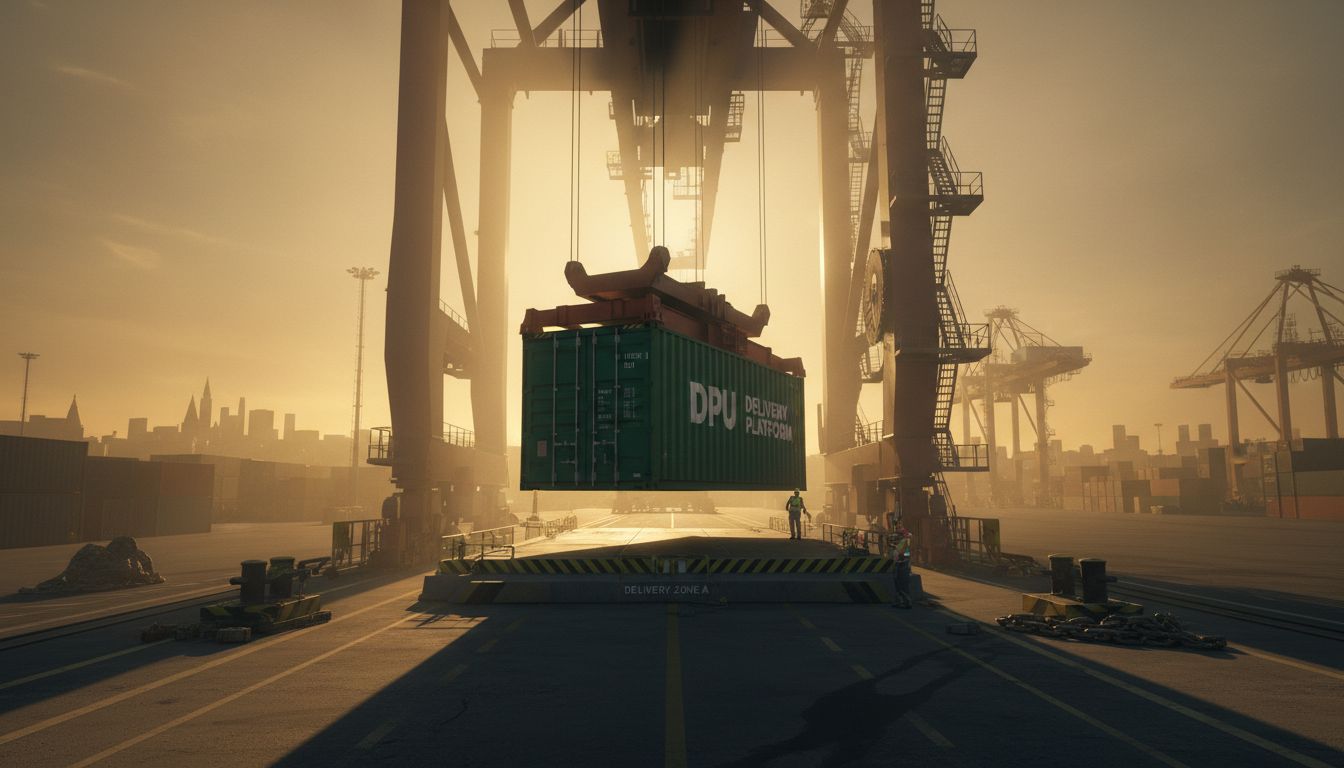
DPU is the only Incoterm that explicitly requires the seller to unload the goods at the named place of destination. The seller bears all risks and costs associated with transport and unloading until the goods are placed at the agreed location.
For EU companies, this means the seller must arrange transport, export customs clearance, and unloading at the buyer’s premises or another specified place within the EU single market or beyond. The risk transfers to the buyer only after the goods have been unloaded.
DPU is particularly beneficial when the buyer lacks the facilities or equipment to unload goods or prefers the seller to manage this operation. It also clarifies cost allocation by placing unloading expenses on the seller.
However, import customs clearance and duties remain the buyer’s responsibility unless otherwise agreed. This distinction is critical for compliance with EU customs regulations and accurate cost forecasting.
Key Differences Between DAP and DPU for EU Businesses
The primary difference between DAP and DPU lies in the unloading obligation and the point at which risk transfers from seller to buyer:
- Unloading Responsibility: Under DAP, the buyer unloads; under DPU, the seller unloads.
- Risk Transfer: For DAP, risk passes when goods are delivered ready for unloading; for DPU, risk passes only after unloading is complete.
- Cost Allocation: Unloading costs are borne by the buyer under DAP and by the seller under DPU.
For EU companies, these differences affect logistics contracts, insurance coverage, and customs procedures. For example, under DPU, the seller’s responsibility extends further, possibly increasing their costs but reducing the buyer’s operational burden.
Choosing between DAP and DPU also impacts compliance with customs declarations and the timing of import duties payment, which are typically the buyer’s responsibility in both cases.
Risk and Cost Transfer: A Critical Distinction
Understanding when risk and costs transfer is crucial for EU businesses to manage liability and financial exposure. Under DAP, the buyer assumes risk upon delivery of goods ready for unloading, meaning any damage during unloading is the buyer’s responsibility.
Conversely, under DPU, the seller retains risk until unloading is complete, protecting the buyer from unloading-related damage or loss. This can influence insurance arrangements and contractual liability clauses.
Cost-wise, DAP shifts unloading expenses to the buyer, while DPU includes unloading costs in the seller’s price. This affects pricing negotiations and overall trade terms.
EU companies importing or exporting goods should clearly specify the Incoterm in contracts and ensure their logistics and customs teams understand the implications to avoid disputes or unexpected costs.
Practical Implications for EU Importers and Exporters
For EU importers, using DAP means preparing for unloading operations and import customs clearance, including payment of duties and taxes. The importer must have the necessary infrastructure or third-party services to unload goods safely.
Exporters using DAP must ensure timely delivery to the named place and provide all relevant transport and export documentation but are relieved from unloading duties.
When using DPU, exporters must plan for unloading at the destination, which might require coordination with local handling agents or equipment. This can increase operational complexity but provides a competitive advantage to buyers who prefer a turnkey delivery.
Both Incoterms require clear communication and coordination between parties to ensure compliance with EU customs regulations, including correct tariff classification and declaration under the Common Customs Tariff [1], [2], [3], [4], [5], [6], [7], [8].
Choosing the Right Incoterm: Strategic Considerations
Selecting between DAP and DPU depends on several factors:
- Buyer’s capacity to unload: If the buyer lacks unloading facilities, DPU is preferable.
- Cost control and risk appetite: Buyers willing to assume unloading risk and costs may opt for DAP.
- Customs and regulatory compliance: Both terms require careful alignment with EU customs procedures.
- Logistics complexity: Sellers must assess their ability to manage unloading under DPU.
- Contractual clarity: Precise specification of the named place and responsibilities avoids disputes.
EU businesses should evaluate these factors in the context of their supply chain, contractual relationships, and regulatory environment to optimise trade efficiency and compliance.
FAQ
What is the difference between DAP and DPU Incoterms?
DAP requires the buyer to unload goods at the named place, whereas DPU requires the seller to unload. Risk transfers at different points: at delivery ready for unloading under DAP, and after unloading under DPU.
Who is responsible for unloading under DAP?
The buyer is responsible for unloading the goods under DAP.
When should I use DPU instead of DAP?
Use DPU when the seller is better equipped or contractually obliged to handle unloading, or when the buyer prefers the seller to bear unloading risks and costs.
What are the buyer’s obligations under DAP?
The buyer must unload the goods upon delivery, handle import customs clearance, and pay any applicable duties and taxes.
Does DPU include import customs clearance?
No, import customs clearance and payment of duties generally remain the buyer’s responsibility under DPU unless otherwise agreed.
How do Incoterms affect customs duties for EU companies?
Incoterms define delivery points and risk transfer but do not change customs duty liability, which depends on import status and customs declarations made to the relevant Member State authority.
This article provides general information on the practical distinctions between DAP and DPU under Incoterms 2020 for EU businesses. For specific cases, consulting qualified legal counsel or the relevant national competent authority is recommended.
Sources
Not sure which Incoterm to put on the quote?
The Incoterm Advisor picks the right delivery term for your route and tells you exactly where cost and risk change hands.