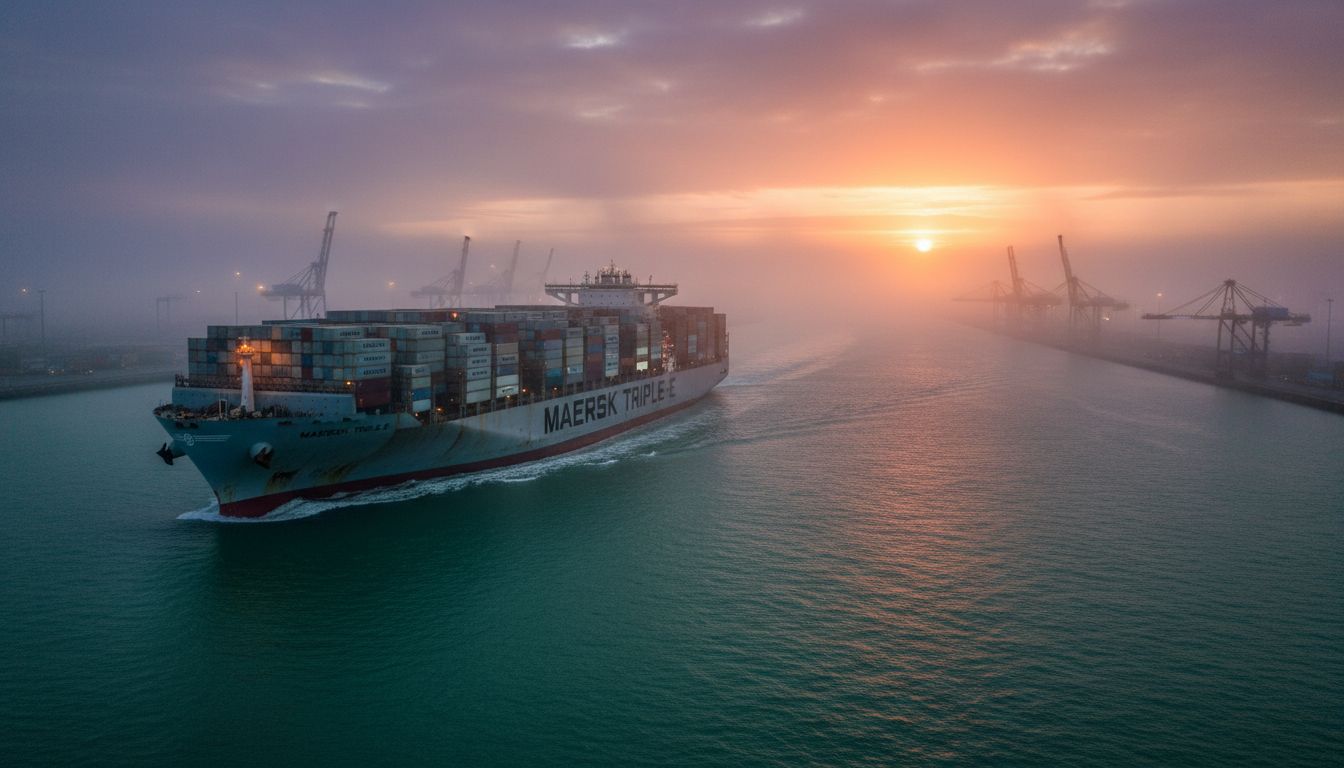
CIF: What it means for EU businesses

Quick answer
CIF (Cost, Insurance, and Freight) is an Incoterm that defines the seller’s responsibility to cover the cost of goods, insurance, and freight to a named port of destination. For EU businesses, understanding the meaning of CIF is essential for correctly managing customs declarations, calculating customs value, and ensuring compliance with EU trade regulations.
DPick the right Incoterm — free, no sign-up to try.Key takeaways
- CIF is an Incoterm specifying that the seller pays for goods, insurance, and freight to the destination port, but the buyer assumes risk after shipment.
- CIF affects the customs value declared in EU import procedures, as the price includes cost, insurance, and freight.
- EU customs declarations require detailed information, including commodity codes, customs value, and supporting documents.
- The Union Customs Code (UCC) governs customs procedures in the EU single market, setting out obligations and rights for traders.
- Compliance with EU customs rules involves accurate declarations, correct valuation, and adherence to deadlines and documentation requirements.
CIF in EU Trade: A Misconception
In the context of EU trade, the meaning of CIF is often misunderstood. CIF is not a customs valuation method but rather an international commercial term (Incoterm) that allocates costs and risks between buyer and seller during the transport of goods. While CIF includes the cost of goods, insurance, and freight to the named port of destination, it does not transfer ownership or risk at the same point. For EU businesses importing goods, this distinction is critical because customs valuation in the EU generally follows the transaction value method, which may incorporate CIF costs when determining the customs value of imported goods.
The misconception arises when businesses assume CIF automatically dictates customs duties or VAT calculations. Instead, the customs value declared must reflect the price actually paid or payable for the goods, adjusted as necessary under EU rules, which often includes the cost of freight and insurance if these are not separately invoiced. Therefore, understanding the meaning of CIF in practice means recognising its role in pricing and risk allocation but also knowing how it integrates with EU customs valuation principles [1].
Understanding Incoterms and Their Relevance
Incoterms, published by the International Chamber of Commerce, are globally recognised trade terms that define responsibilities between sellers and buyers. CIF is one of these terms and is commonly used in maritime and inland waterway transport. Under CIF, the seller must arrange and pay for the transport of goods to the destination port, including insurance against the buyer’s risk of loss or damage during transit.
For EU businesses, knowing the Incoterm used in a contract is essential because it affects the logistics, insurance arrangements, and customs formalities. CIF means the seller covers freight and insurance costs, but the risk passes to the buyer once the goods are loaded on the vessel. This impacts when and how customs declarations are prepared and who is responsible for customs clearance and payment of duties.
While Incoterms like CIF do not determine customs duties themselves, they influence the customs value calculation, which is the basis for duty and VAT assessment. The customs value in the EU includes the cost of goods plus certain costs such as freight and insurance, which aligns with the components of CIF, unless these costs are separately invoiced or paid by the buyer [1:1].
Key Elements of EU Customs Declarations
When importing goods into the EU under CIF terms, businesses must submit customs declarations that include precise information to the relevant national customs authority. The declaration must contain:
- The commodity code (tariff classification) of the goods.
- The customs value, which generally includes the cost, insurance, and freight if these are part of the price paid or payable.
- Details of the supplier and consignee, including full names and addresses.
- Invoice numbers and descriptions of the goods.
- Quantity and packaging details.
- Gross mass or other relevant measures.
This information is essential for customs authorities to assess duties and taxes correctly and to ensure compliance with EU trade regulations. Supporting documents such as invoices, transport documents, and certificates of origin may be required to substantiate the declaration [1:2].
Information Required for Customs Procedures
In addition to the declaration data, EU customs procedures may require specific certificates and endorsements. For example, an information certificate INF 4 may be necessary to certify the details of the supplier, consignee, and goods, including invoice numbers and gross mass. The supplier must provide a declaration confirming the accuracy of the information.
These documents support the customs declaration and help prevent delays or penalties. EU businesses must maintain accurate records and ensure all required information is complete and truthful to facilitate smooth customs clearance [1:3].
The Role of the Union Customs Code
The Union Customs Code (UCC) Regulation (EU) No 952/2013 and its implementing acts provide the legal framework for customs procedures in the EU single market. The UCC sets out the obligations of traders, including the requirement to submit customs declarations, the calculation of customs value, and the application of duties and taxes.
Under the UCC, the customs value is primarily based on the transaction value, which includes the price paid or payable for the goods plus certain costs such as freight and insurance when these are not separately invoiced. This aligns with the components covered by CIF terms, making it important for EU businesses to understand how CIF prices relate to customs valuation.
The UCC also establishes the use of the Economic Operators Registration and Identification (EORI) number, which all businesses involved in customs activities in the EU must obtain. This number is used in customs declarations and communications with customs authorities.
Compliance with the UCC ensures that EU businesses importing under CIF terms meet their legal obligations and avoid penalties or delays [1:4].
Ensuring Compliance with EU Regulations
To stay compliant with EU trade and customs regulations when dealing with CIF shipments, EU businesses should:
- Confirm the correct commodity code for each product to ensure accurate tariff classification.
- Calculate the customs value correctly, including cost, insurance, and freight components as applicable.
- Obtain and provide all necessary supporting documents, including invoices, transport documents, and certificates.
- Use the EORI number in all customs declarations and communications.
- Submit customs declarations within the deadlines set by the relevant Member State authority.
- Monitor changes in EU customs regulations and Incoterm interpretations to maintain compliance.
Failing to comply with these obligations can result in customs delays, financial penalties, or incorrect duty payments. Therefore, understanding the meaning of CIF in the context of EU customs and trade compliance is vital for smooth import operations [1:5].
Next steps
- Confirm the commodity code for each line item in your CIF shipment to ensure accurate tariff classification.
- Calculate the customs value including cost, insurance, and freight components as per the transaction value method.
- Gather and prepare all required supporting documents, including invoices and certificates, for customs declaration.
- Verify that your business has a valid EORI number for customs procedures within the EU.
- Submit the customs declaration to the relevant national competent authority within the prescribed deadlines.
FAQ
What’s the difference between FOB and CIF?
FOB (Free On Board) means the seller’s responsibility ends once goods are loaded onto the vessel, with the buyer paying for freight and insurance. CIF means the seller pays for cost, insurance, and freight to the destination port, but risk transfers to the buyer once goods are on board. CIF includes insurance coverage arranged by the seller, unlike FOB [1:6].
Who pays duty on CIF?
In CIF transactions, the buyer is responsible for paying customs duties and taxes upon import into the EU. The customs value declared will typically include the cost, insurance, and freight paid by the seller, forming the basis for duty calculation [1:7].
What does CIF mean in delivery?
CIF means the seller delivers goods on board the vessel at the port of shipment and pays the cost of freight and insurance to the named destination port. The risk passes to the buyer once the goods are loaded, but the seller covers transport and insurance costs until arrival at the destination port [1:8].
How much is 1 CIF?
“1 CIF” is not a quantifiable amount but a term indicating that the price includes cost, insurance, and freight. The actual monetary value depends on the contract price agreed between buyer and seller, including those components [1:9].
Sources
Not sure which Incoterm to put on the quote?
The Incoterm Advisor picks the right delivery term for your route and tells you exactly where cost and risk change hands.